


Austin Brewers Are Finding New Flavors Close to Home

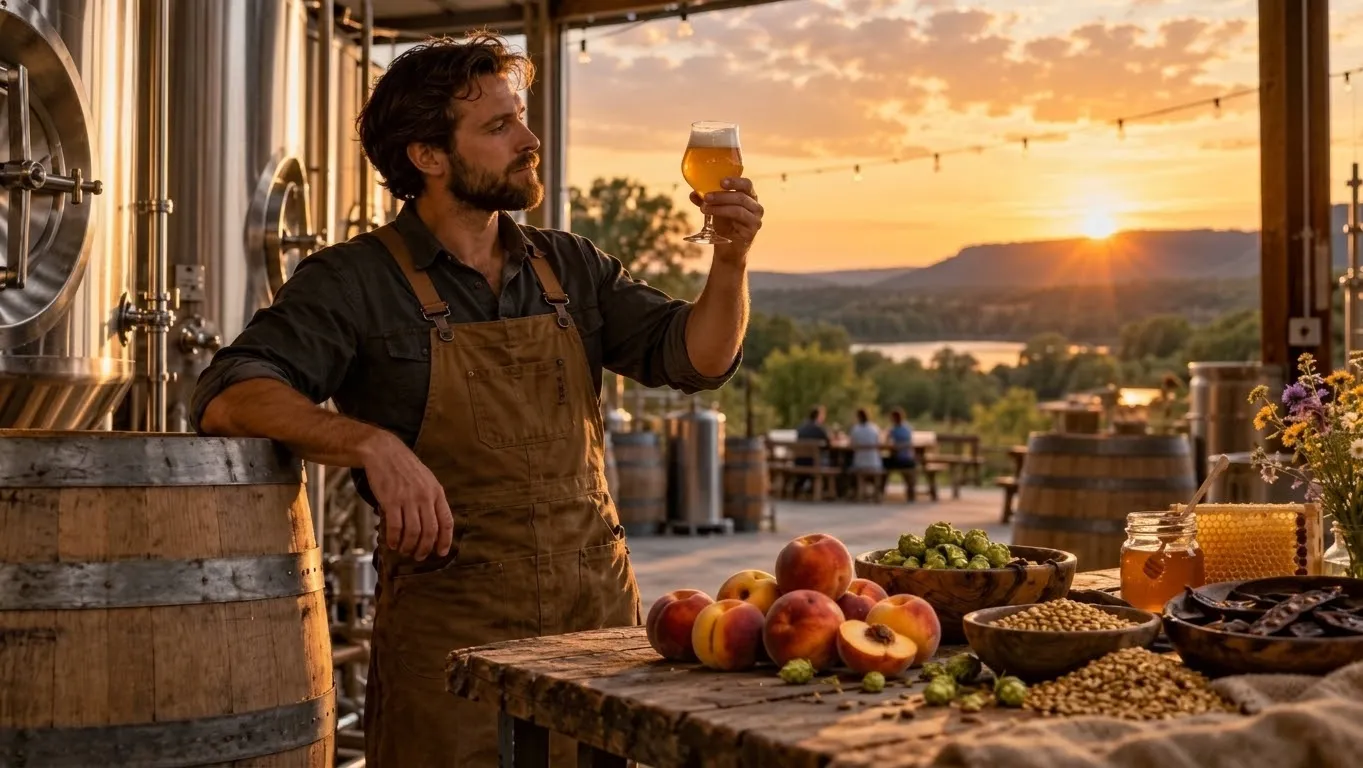

Twenty pounds of peaches for five gallons of beer sounds excessive until you look at Jester King's Fēn Táo recipe. The fruit comes from Vogel Orchard in Stonewall, about an hour west of Austin, and goes into the beer after its initial fermentation. By then, the brewer has already spent weeks developing the base ale.
Central Texas breweries have found plenty to work with close to home: peaches, mesquite, wildflower honey, and locally malted grain. The difficulty lies in getting these ingredients to behave in a fermenter. Fruit harvests vary, honey ferments differently from malt, and a beer made with local produce can change noticeably between batches.
Jester King Gives the Orchard a Say
Jester King operates on Fitzhugh Road in the Texas Hill Country, where its farmhouse brewing program has developed a distinctive reputation for mixed fermentation. The brewery uses ingredients connected to the surrounding region rather than relying exclusively on standardized commercial flavorings.
Its Fēn Táo recipe, published in April 2022, provides a particularly detailed example. The grain bill contains pilsner malt and wheat supplied by Texas maltster TexMalt, alongside flaked oats and Goldings hops.
Vogel Orchard peaches supply the fruit component. The recipe specifies a mixed fermentation culture involving saison yeast and microorganisms associated with the brewery's environment. The result depends on both the original wort and what happens during maturation.
Twenty Pounds of Peaches Need Time
Jester King's recipe calls for primary fermentation followed by eight to twelve weeks of maturation. Once the beer has developed sufficient acidity and fermentation character, the brewer removes the peach pits, crushes the fruit, and adds it for another three to four weeks.
Fermentation changes the expected flavor. Yeast consumes available fruit sugars, leaving an ale that can taste considerably drier than fresh peaches would suggest.
The published recipe targets a final gravity of approximately 1.003 and recommends bottle conditioning to three volumes of carbonation. These specifications provide insight into how sweetness, acidity, and texture are controlled.
Mesquite and Honey Take Different Routes
Jester King's ingredient experiments are not limited to orchard fruit. The brewery has also documented releases using mesquite beans and Texas wildflower honey, drawing on materials associated with the region's agricultural environment.
Mesquite contributes characteristics that depend on how the ingredient is prepared and introduced. Honey behaves differently because much of its sugar can ferment, increasing alcohol production without necessarily leaving a sweet finish.
Football on the Screen, Local Beer on Tap
Football season gives Austin drinkers another reason to spend an afternoon in a taproom. College games draw attention around the city, while Premier League fixtures often bring supporters out earlier in the day. The televisions may show the same match, but the beer selection changes considerably from one establishment to another.
Sportsbook followers have their own numbers to consider. Someone checking football betting bd markets during a match will see prices move after a goal, a red card, or a significant change in possession and attacking pressure. Decimal odds of 2.00 imply a 50% probability before the bookmaker's margin, although the eventual result remains uncertain. The accepted price and the market's settlement rules determine the wager rather than whatever appears on screen several minutes later.
The Water Comes From Below the Brewery
Fruit gets most of the attention, yet Jester King's well water has a hand in every batch. The brewery draws from the Trinity Aquifer, and its published Fēn Táo recipe discusses the mineral composition rather than treating water as a neutral ingredient.
Calcium, magnesium, and bicarbonate affect brewing chemistry in different ways. Bicarbonate can influence mash pH, while calcium contributes to several processes involved in mashing and fermentation. Brewers sometimes adjust mineral concentrations to suit a particular style, but Jester King's recipe favors working with the character of its existing water supply.
Vista Brewing, about 30 miles southwest of downtown Austin in Driftwood, takes a similarly place-conscious approach. Its 21-acre property combines a brewhouse, restaurant, and agricultural operations, with water drawn from a well reaching approximately 450 feet into the Middle Trinity Aquifer.
An Ingredient Can Create a Paperwork Problem
Brewers experimenting with unfamiliar ingredients have another consideration besides flavor: federal formula requirements. TTB Ruling 2015-1 identifies certain ingredients and processes exempt from formula approval, while recipes outside those exemptions may need additional review.
A brewery developing a fruit or herb beer must check the applicable rules before commercial production. The finished label also needs to describe the beverage accurately. A beer's name cannot compensate for misleading ingredient information.
Product conditions can be equally specific in digital entertainment. Football followers considering a MelBet app free download for android may encounter mobile betting markets where a displayed price changes before the wager reaches the operator. The accepted odds determine the transaction, while bonuses may carry wagering requirements separate from the deposited balance. Account verification can also affect access to withdrawals. Those details belong in the service's actual terms, where users can check them rather than relying on promotional descriptions.
October 22 Is for the Sour-Beer Crowd
Jester King's Funk n' Sour festival is scheduled for October 22, 2026. Around 40 participating restaurants, breweries, wineries, and distilleries have been announced, with special food and beverage pairings planned for the evening.
A sour ale that seems too acidic on its own might be just right alongside a rich, fatty dish. Others are harder to pair. Heavy oak, pronounced Brettanomyces character, or aggressive acidity can bury quieter flavors, and a good pairing needs more thought than putting an unusual beer next to an unusual plate.
The festival is also a chance to taste releases that rarely appear together. Some pours may be available only that night, while older favorites aren't necessarily returning. Fēn Táo is a good example: Jester King published the recipe years ago, but that doesn't put the peach ale on the October tap list. Anyone going specifically for it should check the announced beer selection before buying a ticket.
Berita Terkait











































































Discussion
Bagikan pemikiran dan pendapat Anda